
Currently Empty: $0.00
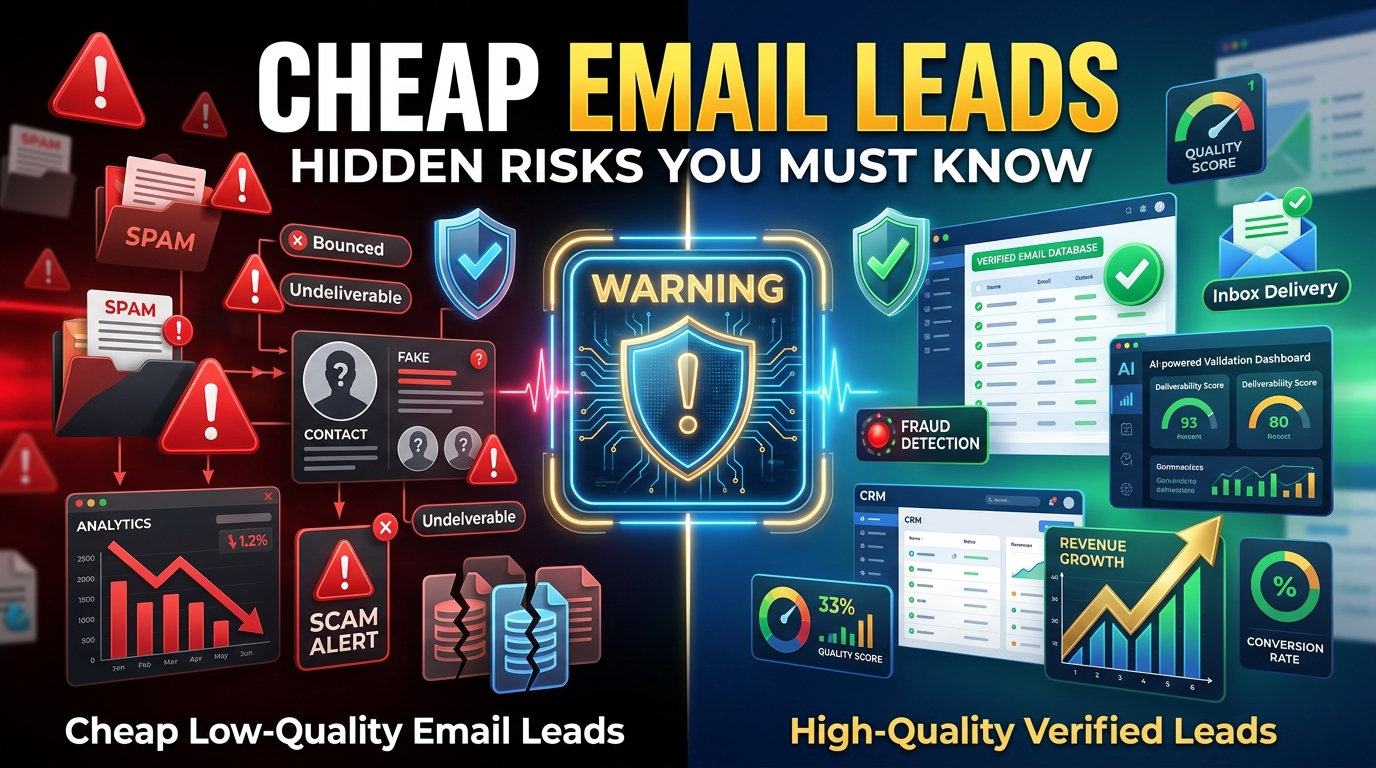
I got a message from someone in an online business forum bragging about finding “10,000 emails for $50” and asking if anyone wanted to split the cost with him. A few people jumped on it immediately, excited about the deal. I didn’t reply publicly, but I messaged one person privately who’d shown interest, just to share what I’d seen happen with similarly priced lists before. She held off, and a few weeks later, someone else in that same thread posted about their account getting suspended after using that exact list. The “deal” wasn’t really a deal at all once the actual consequences played out.
Why Cheap Pricing Should Immediately Raise Questions
Legitimate data collection, verification, and compliance work costs real money and effort. When a price seems dramatically lower than what reputable providers charge, it’s worth asking seriously why that might be, rather than just feeling excited about the apparent bargain.
Risk 1: The Data Is Often Fake or Recycled Garbage
Extremely cheap lists are frequently padded with randomly generated addresses, long-dead accounts, or the same recycled data sold repeatedly to different buyers under different branding. The person who eventually got suspended found, after running the list through a verification tool afterward, that nearly 60% of the addresses were invalid or clearly fake.
Risk 2: Sender Reputation Damage Happens Fast
Sending to a cheap, low-quality list tends to trigger high bounce rates and spam complaints almost immediately, since a meaningful chunk of addresses were never real, engaged signups to begin with. This can tank your domain’s sender reputation within a single send, affecting even your legitimate email communications afterward.
Risk 3: Email Platform Account Suspension
Most mainstream email tools explicitly prohibit sending to purchased lists in their terms of service. That forum member’s account suspension happened because their provider detected unusually high spam complaints tied directly to that cheap list, regardless of any legal question entirely.
Risk 4: Legal and Compliance Exposure
Extremely cheap lists rarely come with any genuine documentation around consent or compliance with regulations like GDPR, since proper compliance processes cost real money that a $50-for-10,000-emails price point simply couldn’t cover.
Risk 5: Wasted Time on Completely Unqualified Contacts
Beyond the technical risks, cheap lists are often poorly targeted or entirely irrelevant to your actual business, meaning even the valid, real addresses often belong to people with zero genuine interest or fit for what you’re selling.
Step-by-Step: How to Evaluate Whether a Cheap Price Is a Red Flag
Step 1: Compare the price against reputable providers. If a price is dramatically lower than what established, verifiable providers charge for similar volume and specificity, treat that gap as a serious warning sign rather than a lucky find.
Step 2: Ask for clear sourcing details. Legitimate, reasonably priced providers can explain their data collection process specifically. Extremely cheap sellers often can’t or won’t.
Step 3: Request a sample and verify it independently. Running even a small sample through a tool like NeverBounce before any larger commitment reveals a lot about actual data quality.
Step 4: Consider the true cost, not just the sticker price. Factor in potential deliverability damage, wasted time, and platform risk when weighing whether a cheap list is actually a good deal at all.
A Real Example Showing the Full Cost of “Cheap”
That forum member’s account suspension meant losing access to his existing, legitimate subscriber list for nearly two weeks while he set up a new email platform and slowly rebuilt sending reputation. The actual cost of that “cheap” $50 list, once you factor in lost time, disrupted communication with real customers, and the effort of switching platforms, ended up being far higher than what a reputable, properly priced list would have cost from the start.
Common Mistakes to Avoid
- Getting excited about a price that seems dramatically lower than industry norms without asking why.
- Skipping independent verification because the low price made it feel low-risk.
- Ignoring your email platform’s terms of service regarding purchased lists.
- Not considering the true cost of potential deliverability damage and account suspension.
- Assuming volume alone (10,000 emails!) automatically represents good value.
Final Thoughts
A dramatically cheap email list almost always comes with hidden costs that end up far outweighing whatever money it initially seemed to save. That forum member’s two weeks of disrupted email access is honestly a pretty mild outcome compared to what I’ve seen happen in other cases, and it’s a solid reminder that when a lead list price seems too good to be true, it usually is.