
Currently Empty: $0.00
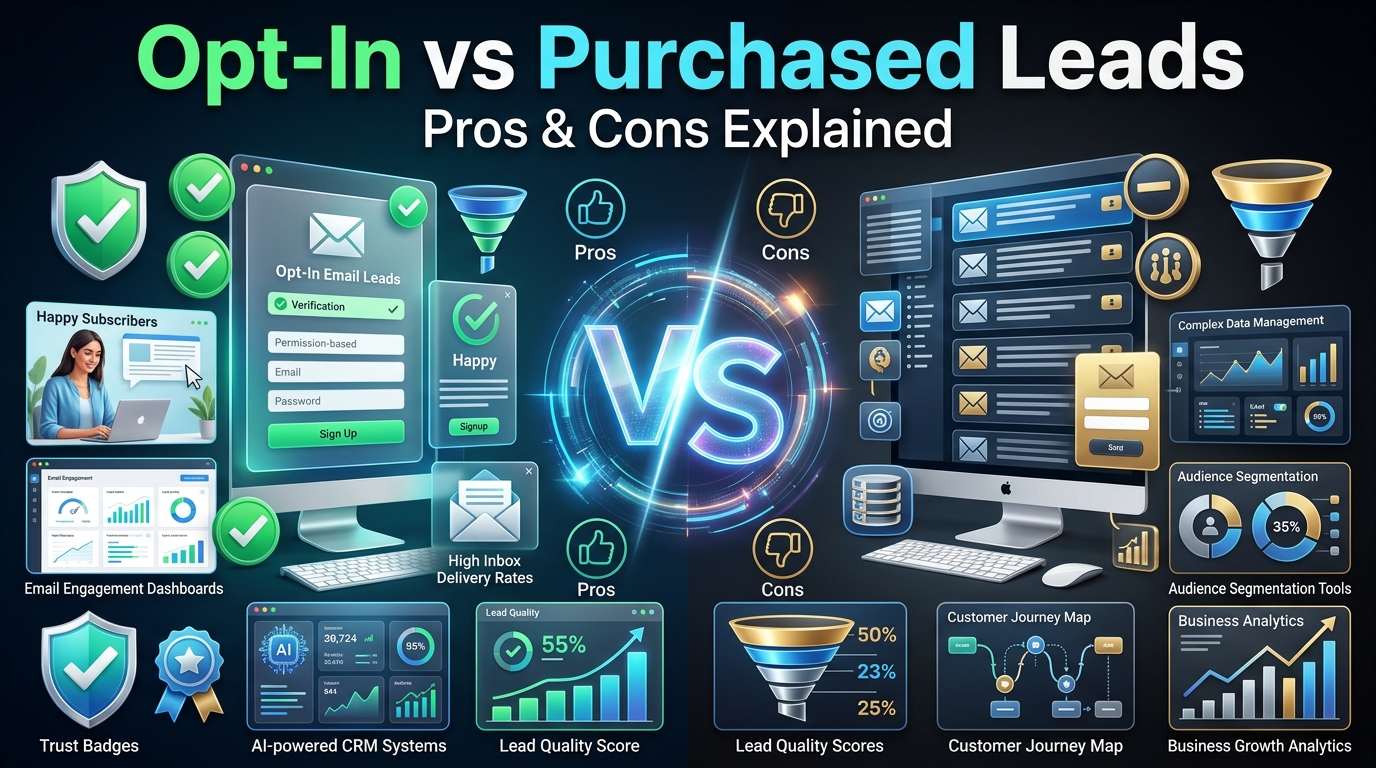
A guy in a Facebook group I’m part of once messaged me asking if he should buy “10,000 verified business emails” for $80 he found on some marketplace site. It sounded like a steal to him. I told him flat out — don’t do it. He did it anyway, and three weeks later came back saying his domain got flagged by Google and his real, legitimate emails were now landing in spam too. That whole mess could’ve been avoided if he understood the actual difference between opt-in leads and purchased leads before spending a single dollar.
What Opt-In Leads Actually Are
Opt-in leads are people who willingly gave you their email because they wanted to. They filled out a form, clicked a checkbox, or subscribed to something specific. They know who you are, at least a little bit, and they expect to hear from you.
What Purchased Leads Actually Are
Purchased leads are emails you buy from a third party, usually scraped from directories, old databases, or shady data brokers. These people have no idea who you are and never agreed to hear from you. Some of these lists are outdated, some are flat-out fake, and a good chunk are what’s called spam traps — emails specifically set up to catch and flag senders like you.
Pros and Cons of Opt-In Leads
Pros:
- Higher open and click rates because people actually want to hear from you
- Better sender reputation over time since fewer spam complaints happen
- Legally safer under regulations like GDPR and CAN-SPAM
- Leads tend to convert better since there’s already some trust built
Cons:
- Takes more time and effort to build the list
- Requires an actual offer or reason for people to sign up
- Growth is slower, especially early on
Pros and Cons of Purchased Leads
Pros:
- Instant access to a large volume of contacts
- No need to build a landing page or lead magnet first
Cons:
- Extremely low engagement, often under 1-2% open rates
- High risk of spam complaints and blacklisting
- Many email providers like Google and Microsoft actively penalize this behavior
- Often violates the terms of service of email tools like Mailchimp or ConvertKit, which can get your account suspended
- Legal risk depending on where your recipients are located
What Actually Happened When That Guy Bought His List
Within days of sending his first campaign to the purchased list, his spam complaint rate crossed 5%, which is way above what most email providers consider acceptable (usually under 0.1%). His domain got flagged, his emails to his real subscribers started landing in spam or promotions folders, and it took almost a month of careful sending and warming up his domain again before things went back to normal. That $80 “deal” ended up costing him way more in lost sales and recovery time.
Step-by-Step: How to Build Opt-In Leads Properly Instead
Step 1: Create a lead magnet people actually want. A checklist, discount code, or free guide relevant to your niche works well.
Step 2: Add a simple, clear signup form. Tools like MailerLite or ConvertKit make this pretty painless, even for beginners.
Step 3: Use double opt-in if possible. This means people confirm their email after signing up, which keeps your list cleaner and more engaged.
Step 4: Be patient and consistent. Growth from opt-in leads is slower, but the quality difference is night and day compared to a purchased list.
Mistakes I’ve Personally Made in This Area
Early in my career I inherited a “lead list” from a previous marketer at a company I worked with, without checking where it came from. Turns out it was partly purchased. Our sender score tanked and I had to spend weeks cleaning the list and rebuilding trust with our email provider. Lesson learned — always check the source of any list you didn’t personally build.
Common Mistakes to Avoid
- Buying email lists thinking it’ll save time in the long run.
- Not checking the source of an inherited or shared list.
- Ignoring spam complaint rates until it’s already a serious problem.
- Skipping double opt-in when list quality matters most.
- Assuming all “verified” lead sellers are actually legitimate.
Final Thoughts
I get why purchased leads look tempting, especially when you’re just starting out and want quick results. But from what I’ve seen firsthand, it almost never pays off the way people expect. Opt-in leads take longer to build, but they actually convert, they keep your sender reputation healthy, and they don’t put your entire email system at risk. Slow and steady really does win here.