
Currently Empty: $0.00
A few years ago I was managing marketing for a small online course business, and the owner kept asking, “Why are we collecting all these emails if nobody’s buying?” I pulled up his funnel and realized the problem immediately — he had leads coming in, but absolutely nothing guiding them toward an actual purchase. He was treating email collection as the finish line instead of just one step in a much bigger picture. That conversation is honestly what made me actually understand how email leads are supposed to work inside a sales funnel, instead of just floating around as a random list.
First, What Even Is a Sales Funnel
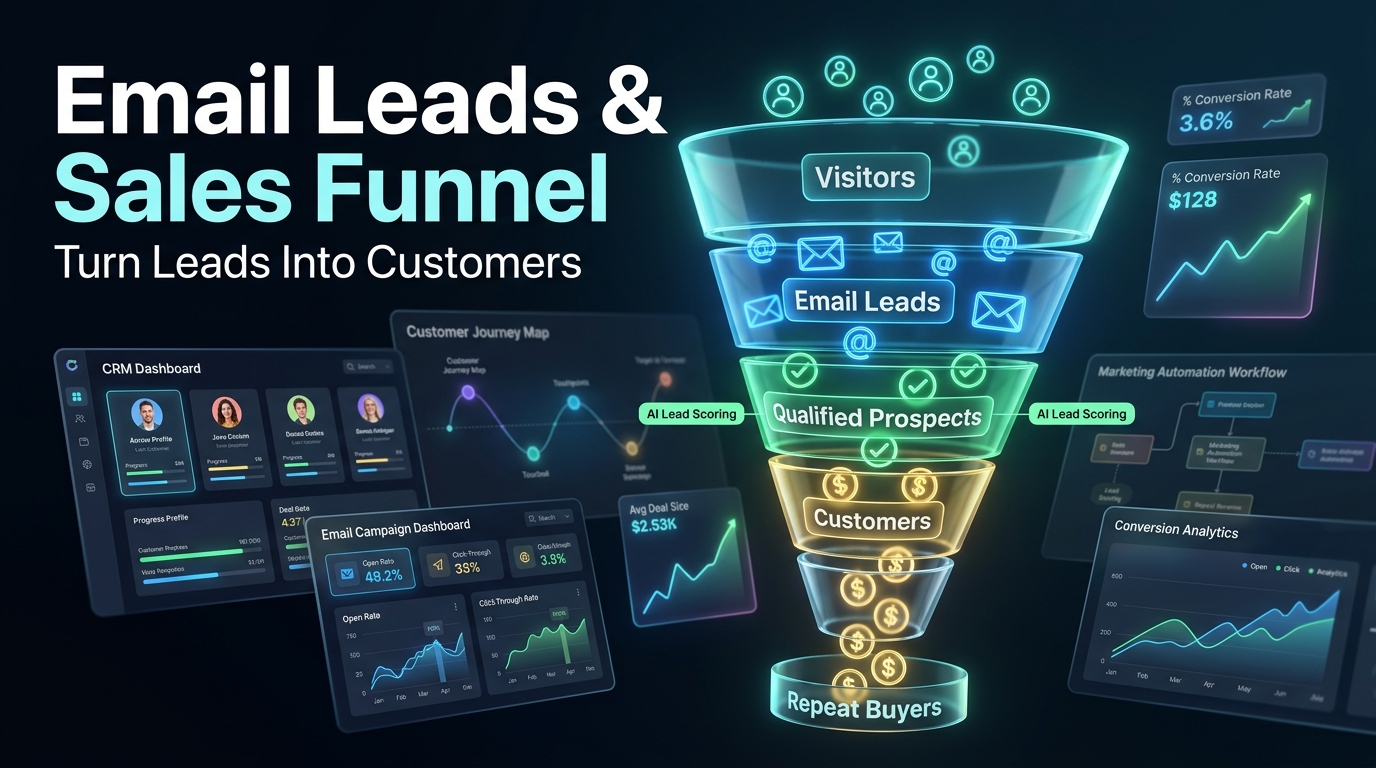
Think of a funnel like a real funnel you’d use in a kitchen — wide at the top, narrow at the bottom. Lots of people enter at the top (awareness stage), fewer move through the middle (consideration), and even fewer actually come out the bottom as paying customers. Email leads usually enter somewhere near the top or middle of this funnel.
Where Email Leads Actually Sit in the Funnel
Here’s how I break it down based on what’s actually worked for the businesses I’ve helped:
Top of funnel (Awareness): Someone finds your blog post, ad, or social content and downloads a free resource. This is where most leads first enter your list.
Middle of funnel (Consideration): These leads get nurtured with helpful content, case studies, or comparisons. They’re deciding if you’re worth trusting.
Bottom of funnel (Decision): This is where the actual pitch happens — a limited-time offer, a demo call, a direct product email.
The mistake that course creator made was skipping straight from top to bottom. New leads got a sales pitch in email number two. No wonder nobody bought.
Step-by-Step: How I Map Leads Through a Funnel
Step 1: Capture the lead with a relevant offer. For his course business, we created a free “5 lesson mini-course” delivered by email instead of a boring generic newsletter signup.
Step 2: Deliver immediate value first. The first two emails were just the free lessons, zero mention of the paid course.
Step 3: Build trust in the middle. Email three included a student success story. Email four addressed a common objection people have before buying — in his case, “I don’t have time for a full course.”
Step 4: Make the offer clearly at the bottom. Email five finally introduced the paid course, with a short-term bonus for early sign-ups.
Step 5: Follow up with non-buyers separately. Anyone who didn’t buy got moved into a slower nurture sequence instead of being hit with repeated hard pitches.
This simple restructuring took his email-driven sales from almost nothing to consistently 15-20% of his monthly course revenue.
Tools That Make This Easier
For mapping out funnels visually, I personally like using ConvertKit’s visual automation builder, or Systeme.io if you want something all-in-one and beginner-friendly. Both let you literally see leads moving from one stage to another based on their actions, like opening an email or clicking a link.
Mistakes I’ve Made With Funnel Mapping
Early on, I used to build funnels way too long, with ten or more emails before ever mentioning a product. People lost interest and unsubscribed before reaching the offer. On the flip side, I’ve also seen funnels that pitch too fast, which feels pushy and kills trust.
Finding the right balance took actual testing. I now usually aim for 4-6 emails in a core funnel sequence, adjusting based on open and click rates along the way.
A Real Example That Shows This in Action
A skincare brand I worked with had leads coming in from an Instagram giveaway, but they were just adding everyone to a generic monthly newsletter. We instead built a proper funnel — welcome email, product education email, customer reviews email, then a limited-time discount. Conversion from that specific lead group jumped from under 1% to close to 6% within the first month of the new sequence.
Common Mistakes to Avoid
- Pitching your product too early before building any trust.
- Treating every lead the same regardless of where they entered the funnel.
- Making the nurture sequence too long and losing people’s interest.
- Not following up separately with leads who didn’t convert the first time.
- Ignoring email analytics that show exactly where people drop off.
Final Thoughts
Once you actually map out where your email leads sit in the funnel, everything about your email strategy starts making more sense. It’s not about blasting the same offer to everyone — it’s about meeting people where they are and guiding them naturally toward a decision. Once that clicked for me, my email campaigns stopped feeling random and started actually working like a proper system.