
Currently Empty: $0.00
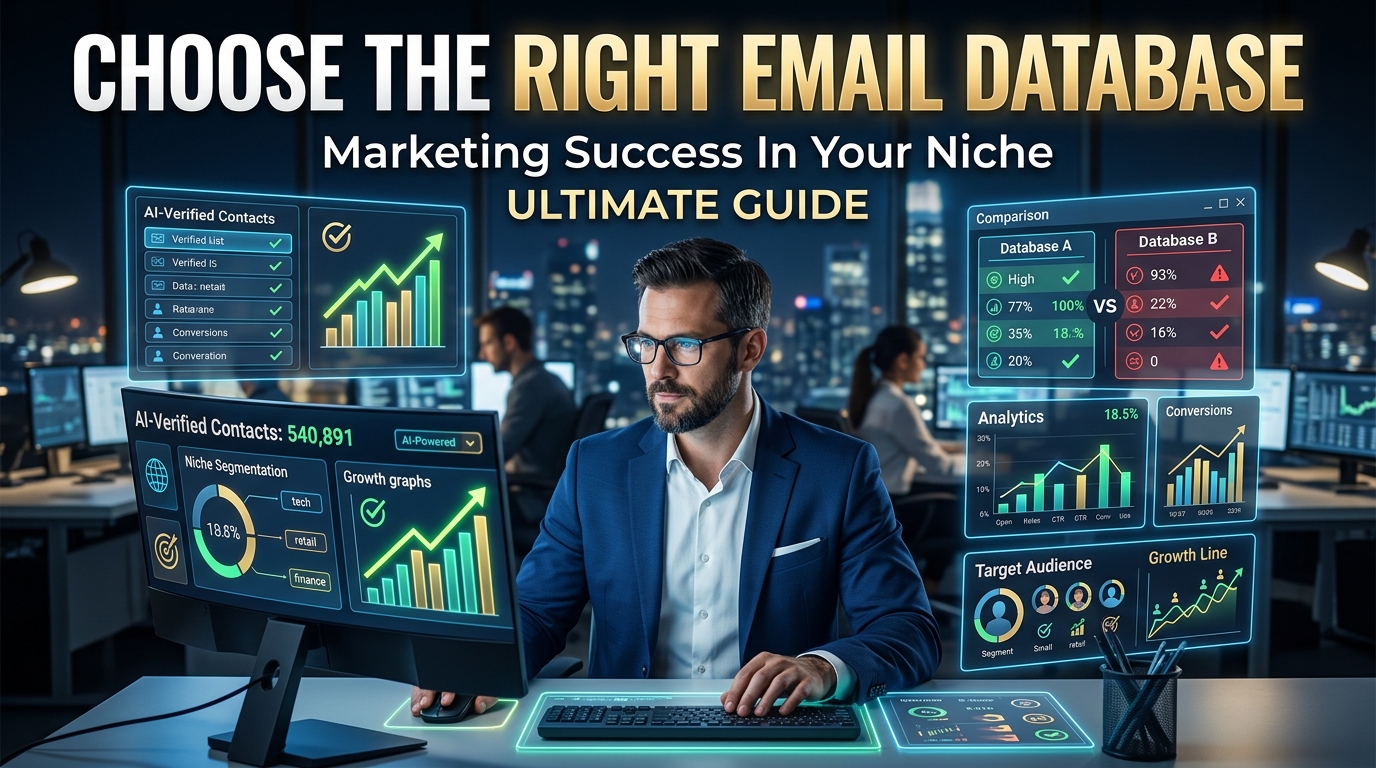
How To Choose the Right Email Database For Marketing Success In Your Niche
I remember the exact moment I wasted $340 on an email list.
It was my second year running a small online store selling handmade leather goods. Someone on a forum — some guy with a fancy signature and 2,000 posts — swore by this “targeted” email database. “300,000 verified buyers,” he said. “Niche-specific.” I clicked the PayPal button before I even finished the sales page.
Three weeks later? Three sales. And two of them were from my existing customers who somehow ended up on that list.
That experience didn’t just burn a hole in my wallet — it completely changed how I think about email marketing. Because here’s what nobody tells you when you’re starting out: an email list and an email database are not the same thing, and picking the wrong one is like fishing in a swimming pool.
Let me walk you through what I’ve learned since then — the hard way, and through a lot of trial and error with tools that actually worked.
First, Know What You’re Actually Buying (or Building)
There’s a big difference between renting a third-party email database and building your own subscriber list. Most beginner marketers don’t make this distinction, and it leads to exactly the kind of expensive mistake I made.
Third-party email databases are lists compiled by data vendors — often from public records, opt-in forms across various platforms, or data partnerships. You’re paying for access to someone else’s contacts. These can be useful in B2B scenarios (more on that later), but they come with serious risks for consumer niches.
Your own email database is built from people who voluntarily signed up for your content. This is almost always more valuable, even if it’s smaller. A list of 500 people who genuinely want your emails beats 50,000 strangers every single time.
The question of which to use — and how to choose well — depends heavily on your niche, your goals, and where you are in your business journey.
Step 1: Define Your Niche Audience With Embarrassing Specificity
Here’s a mistake I still see constantly: marketers say they’re targeting “fitness enthusiasts” or “small business owners.” That’s not a niche. That’s a continent.
Before you look at any database or start building a list, write out a sentence like this:
“My ideal subscriber is a [job title or life situation], aged roughly [range], who is currently struggling with [specific problem] and is actively looking for [specific solution].”
For my leather goods business, that eventually became: “My ideal subscriber is a 30–50 year old professional man who buys quality accessories as a form of self-expression and is tired of fast fashion falling apart on him.”
Once I got that specific, I stopped wasting money on general “men’s fashion” databases and started building my own list from targeted Instagram campaigns and niche blogs. My open rates went from 8% to 31%.
The specificity isn’t just nice to have — it’s the filter you’ll use for every decision that follows.
Step 2: Decide — Buy, Rent, or Build?
Let me be honest: in most consumer niches, buying or renting a cold email database is a minefield. GDPR in Europe, CAN-SPAM in the US, and CASL in Canada all have rules about how you can contact people who haven’t opted in to hear from you. Getting this wrong doesn’t just hurt your reputation — it can get your domain blacklisted or land you with actual fines.
That said, there are scenarios where third-party databases genuinely make sense:
- B2B lead generation: If you’re selling software to marketing managers or equipment to restaurant owners, platforms like ZoomInfo, Apollo.io, or Lusha offer legitimate business contact databases with job titles, company sizes, and intent signals. These are researched and regularly cleaned.
- Trade shows and industry events: Many industries have legitimate compiled lists from event registrations or industry association memberships.
- Co-registration: Some services let you reach people who’ve opted into receiving offers in your category. This is legal and often more relevant than raw cold lists.
For B2C niches — especially lifestyle, health, hobby, or personal finance — I’d almost always recommend building your own list over buying one. The quality difference is staggering.
Step 3: Evaluate a Third-Party Database Like a Skeptic
If you’ve decided a purchased or rented list makes sense for your situation, here’s how to not get burned the way I did:
Ask for a sample before you pay. Any reputable data vendor will give you 50–100 records to test. Run them through an email verification tool like NeverBounce or ZeroBounce before anything else. If more than 5–10% come back as invalid, walk away.
Check the data freshness. Lists go stale fast — people change jobs, abandon email addresses, and unsubscribe from things constantly. A list that hasn’t been updated in 18 months could have a 30–40% invalid rate. Always ask when the data was last verified.
Look for segmentation options. A good vendor doesn’t just give you a flat file of names and emails. They should offer filters: geography, industry, job function, purchase behavior, income range, or whatever’s relevant to your niche. If they can’t segment, the data is probably scraped junk.
Check their compliance documentation. Any legitimate B2B database provider should be able to tell you exactly how their contacts were collected — opt-in forms, content downloads, professional networks, etc. If they’re vague about sourcing, that’s a red flag.
Start small. Don’t buy 100,000 records for a first test. Buy or rent 1,000–2,000, run a campaign, and measure your open rate, click rate, and bounce rate. Let the data tell you if it’s worth scaling.
Step 4: Build Your Own List the Right Way
This is where I’d focus 80% of your energy, regardless of niche. Here’s the approach that’s worked for me across multiple businesses:
Lead magnets that actually match your niche. A generic “sign up for our newsletter” does nothing. A free checklist, quiz result, mini-course, template, or resource that solves one specific problem your audience has? That converts. For my leather goods store, I created a short guide called “How to Care For and Age Your Leather Goods” — it got shared in Facebook groups and forums I wasn’t even posting in.
Segment from day one. Platforms like Mailchimp, Kit (formerly ConvertKit), ActiveCampaign, and Klaviyo all let you tag subscribers based on how they joined your list, what they clicked, or what they bought. Use this. A subscriber who downloaded your beginner guide should get different emails than someone who just bought your premium product.
Use a double opt-in for quality, single opt-in for growth speed. Double opt-in means people confirm their subscription via email — which filters out fake addresses and keeps your list clean. If you’re in a highly regulated space (health, finance, anything for kids), double opt-in isn’t optional. For fast-growing e-commerce lists, single opt-in often works fine with proper email hygiene.
Clean your list every 90 days. This one habit alone saved me from deliverability nightmares. Use tools like ZeroBounce, Mailfloss, or your ESP’s built-in re-engagement campaigns to identify people who haven’t opened an email in 3–6 months. Suppress them or remove them. Sending to dead weight tanks your open rates, hurts your sender reputation, and costs you money if you’re on a list-size pricing plan.
Step 5: Match Your Email Platform to Your Niche’s Needs
The database matters, but so does the tool you use to manage and send from it. Different platforms serve different niches better:
- E-commerce niches (fashion, beauty, home goods, food): Klaviyo is practically the industry standard. Its deep Shopify/WooCommerce integration and behavior-based automation are hard to beat.
- Content creators and personal brands: Kit (formerly ConvertKit) is built specifically for this. Tagging, sequences, and subscriber management are intuitive and creator-friendly.
- B2B and lead generation: ActiveCampaign or HubSpot give you the CRM-email integration you need to track leads through a sales pipeline.
- Small businesses on a budget: Mailchimp still works fine at small scales, though I’ve found their segmentation less flexible as lists grow past 10,000.
The platform you choose affects how you can organize, segment, and automate your database — which directly impacts your results.
Common Mistakes That Will Wreck Your Email Marketing
Let me save you some headaches I’ve already had:
Buying a list because it’s big. Size is the most seductive and most misleading metric. I’d take 2,000 engaged subscribers over 200,000 cold contacts every time.
Ignoring email hygiene until something breaks. By the time your emails are landing in spam, the damage to your sender reputation is already done. Prevention is way cheaper than recovery.
Using one list for everything. Blasting every subscriber with every offer is a fast way to alienate people. Segment based on interest, behavior, and where they are in their relationship with you.
Choosing a database vendor based on price alone. The cheapest lists are cheap for a reason. You’re usually getting outdated, scraped, or recycled data that will hurt your domain health faster than it will generate revenue.
Not testing before scaling. Whether it’s a third-party list or a new lead magnet funnel, always test at small scale first. The data you collect in the first campaign tells you everything you need to know about whether to keep going.
What Actually Works: A Realistic Picture
There’s no magic database that unlocks your niche. What works is a combination of:
- Being brutally specific about who you’re trying to reach
- Building a first-party list through genuine value exchange
- Keeping that list clean and segmented
- Treating subscribers like people, not addresses
If you need to supplement with third-party data (especially in B2B), vet your vendors carefully, test before you commit, and stay compliant.
The marketers I’ve seen succeed with email long-term aren’t the ones with the biggest lists. They’re the ones who know exactly who’s on their list, why those people signed up, and what they actually care about.
That’s not a hack. It’s just respecting your audience — and funnily enough, that’s what pays off.
Got questions about list-building for a specific niche? Drop them in the comments — I check them regularly and always reply.