
Currently Empty: $0.00
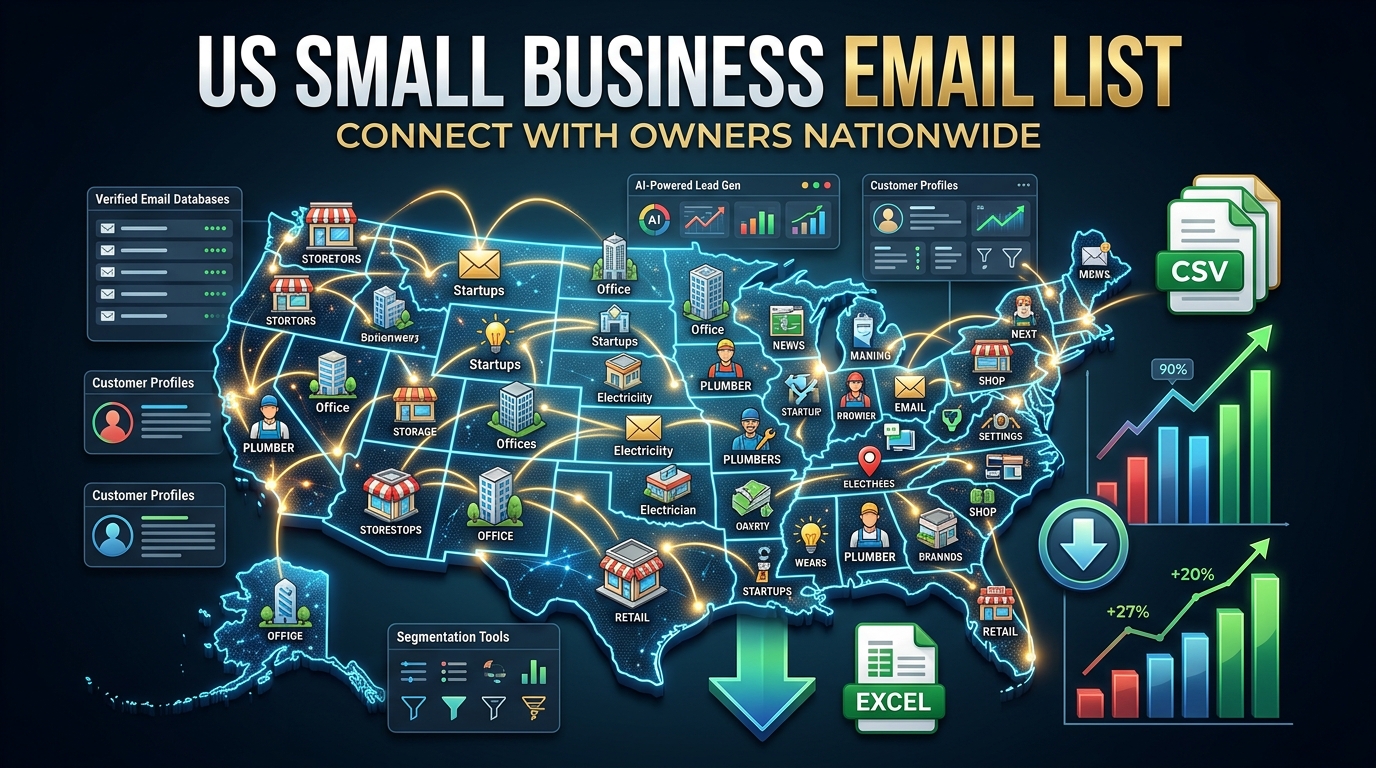
US Small Business Email List Download: Connect With Owners Nationwide
If you sell anything small business owners actually need — software, financing, marketing services, insurance, supplies — you already know the hard part isn’t your pitch, it’s getting in front of the right person. Small businesses don’t usually have a dedicated procurement department or a public directory of decision-makers. Often it’s just one owner wearing every hat, and finding their direct contact info means digging through directories, Google Maps listings, or cold-calling the front desk. That’s the exact gap this kind of list is built to close.
What This List Actually Offers
This is a downloadable database of US small business contacts, typically including the owner or key decision-maker’s name, email, business name, industry, and location. Instead of building a prospect list business-by-business, you get a file you can filter and import straight into your outreach tools.
Hands-On Impressions
The biggest practical advantage here is reaching the actual decision-maker directly. At small businesses, the owner usually makes the call on new tools, services, or vendors — there’s no committee to get through. A list that gets you straight to that person, instead of a generic info@ inbox, cuts out a lot of wasted outreach.
What Surprised Me
Coverage and freshness vary a lot more with small businesses than with larger companies. Small businesses open, close, change hands, and update contact info far more often than enterprise companies do, so don’t be surprised if a noticeable chunk of any small business list needs a verification pass before you rely on it.
Who This Is Best For
Vendors selling products or services specifically to small business owners — point-of-sale systems, business loans, local marketing services, accounting software, insurance, or supply vendors. It’s also useful for agencies running outbound campaigns on behalf of clients targeting this segment.
Who Should Skip It
If your product is built for enterprise buyers or requires a multi-person approval process, this isn’t the right list — small business owners make fast, solo decisions, which is a different sales motion entirely. Also skip it if you’re not prepared to do at least basic list verification, since small business data ages faster than most other B2B segments.
Pros and Cons
Pros
- Direct access to owners and decision-makers instead of generic inboxes
- Useful filtering by industry, location, or business size in most downloads
- Downloadable format makes it easy to import into CRM or email tools
- Good fit for vendors whose ideal customer is specifically a small business
Cons
- Small business contact data ages faster than enterprise data
- Coverage can be inconsistent across less populated regions or niche industries
- Some emails will bounce — verification before a big send is a must
- Not a fit if your offer targets larger companies with formal buying processes
Final Thoughts
For anyone selling directly to small business owners, this kind of list shortcuts a lot of manual prospecting. Just don’t skip the verification step — small business data changes fast, so a quick clean-up before your first campaign will save you both money and your sender reputation.
Frequently Asked Questions
Is it worth buying a small business email list instead of building one manually?
For most vendors targeting this segment at scale, yes — manually researching small business owners one by one is extremely time-consuming compared to starting from a pre-built list. Just plan to verify and clean the list before a large send, since small business contact data changes often.
How accurate are small business contact databases?
Accuracy tends to be lower than enterprise databases because small businesses open, close, or change ownership more frequently. Always check how recently the list was updated and run it through an email verification tool before relying on it for a major campaign.
What industries benefit most from a small business email list?
Vendors selling things small business owners directly decide on — software, financing, insurance, marketing services, or supplies — tend to see the best results, since these are typically fast, single-decision-maker purchases. Products requiring lengthy approval processes are usually a better fit for enterprise-focused lists instead.