
Currently Empty: $0.00
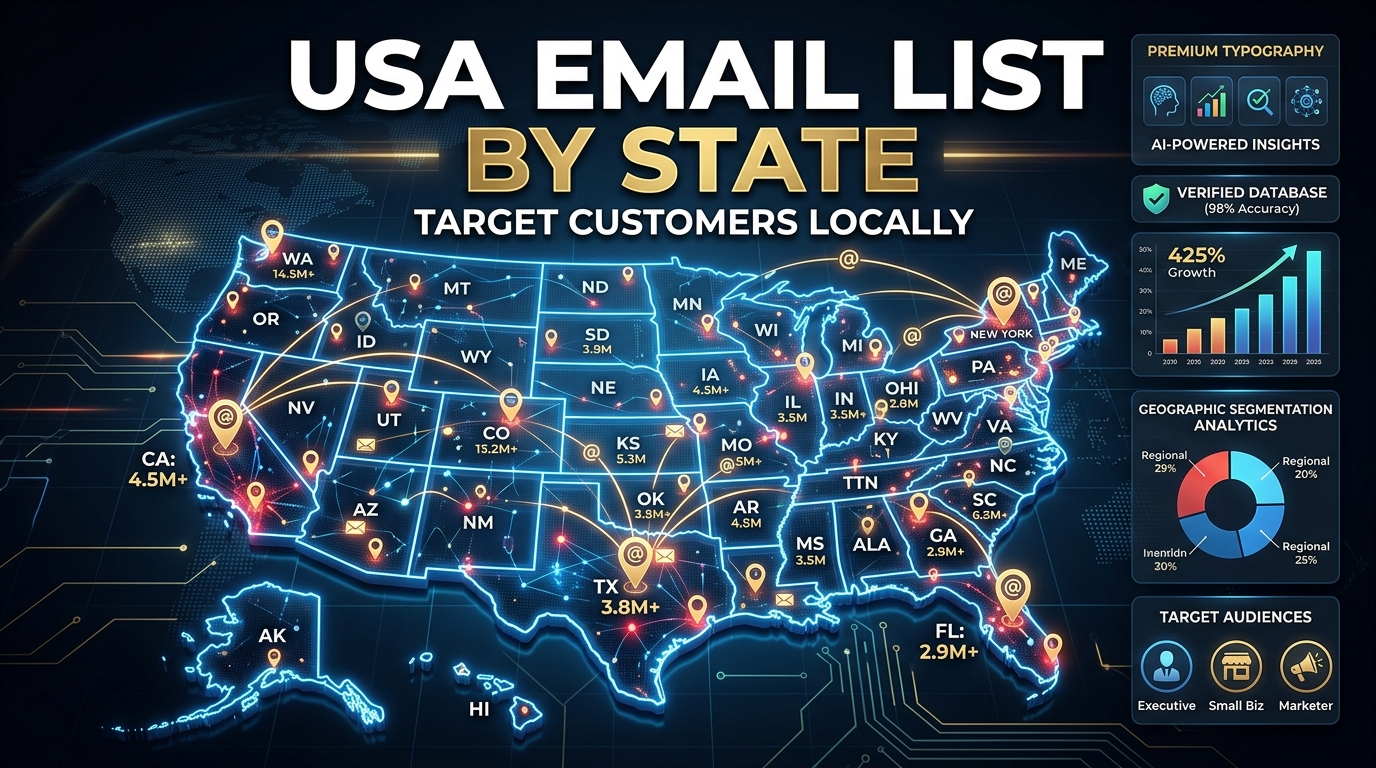
United States Email List By State: Target Your Ideal Customers Locally
Here’s a problem a lot of local and regional businesses run into: your offer only makes sense for people in certain states, but most ad platforms and email tools are built for broad, national targeting. You end up paying to reach people in places you can’t even serve. A state-segmented email list is built to solve exactly that — narrowing your outreach down to the specific geography that actually matters for your business.
What This List Actually Offers
This is a consumer email database broken down by US state, so instead of one giant national file, you can pull contacts specifically from, say, Texas, Ohio, or Florida. The pitch is straightforward: local relevance. A roofing company in Arizona doesn’t need leads in Maine, and this kind of segmentation lets you skip straight to the geography you care about.
Hands-On Impressions
The state-by-state breakdown is genuinely useful for anyone running location-specific campaigns — real estate, local services, regional retail promotions, or state-specific compliance offers. Being able to filter by state alone saves you from manually sorting a giant list or paying for reach you’ll never use.
What You Need to Know Before Buying
The geography is the easy part — the harder part is everything else that comes with using consumer email data. These are personal emails, not business contacts, which means people on the list likely didn’t opt in to hear from your specific brand. That affects both engagement (lower open and click rates than an opt-in list) and your legal responsibilities. CAN-SPAM applies at the federal level no matter which state you target, and several states have their own privacy laws layered on top — California’s CCPA being the best known, but others are catching up. Before you send anything, it’s worth confirming how the list was sourced and whether proper consent or disclosure was involved.
Who This Is Best For
Local and regional businesses running geographically-specific campaigns — think local service providers, regional retailers, state-specific promotions, or political and advocacy outreach that only applies to certain states. It’s also useful for businesses testing a new market in one state before expanding further.
Who Should Skip It
If your business operates nationally and geography doesn’t matter much to your offer, a state-segmented list doesn’t add real value over a broader one. And if you’re not yet familiar with email compliance rules, it’s worth learning those first — geographic targeting doesn’t reduce your legal obligations, it just narrows who you’re emailing.
Pros and Cons
Pros
- Lets you focus budget and outreach on states that actually matter to your business
- Useful for testing new markets without paying for nationwide reach
- Good fit for location-dependent industries like local services or real estate
Cons
- Still carries the lower engagement typical of non-opt-in consumer lists
- Compliance responsibilities don’t disappear just because targeting is local
- Data freshness and accuracy can vary depending on the provider and state
- Smaller states may have thinner coverage than larger, more populous ones
Final Thoughts
If geography is a real factor in who can actually buy from you, a state-segmented list saves you from wasting outreach on people outside your service area. Just treat it the same way you’d treat any purchased consumer list — verify the sourcing, follow compliance rules for every state you’re emailing into, and use it as a targeted reach tool rather than your core marketing strategy.
Frequently Asked Questions
Is it legal to buy a state-specific consumer email list in the USA?
Buying the list itself isn’t automatically illegal, but sending marketing emails is still governed by CAN-SPAM at the federal level, plus any state-specific privacy laws that apply to your recipients. It’s worth checking the rules for each state you plan to target before sending a campaign.
How is a state-based email list different from a national one?
A state-based list lets you target contacts only within specific states rather than across the whole country, which is useful for local or regional businesses that don’t serve every market. The data itself works the same way — it’s just filtered by geography rather than by industry or demographic.
Do local businesses actually benefit from buying email lists?
They can, especially for testing a new market or running a location-specific promotion where national reach would be wasted. That said, engagement is usually lower than with a list built from local opt-ins, so it works best as a supplement rather than a replacement for organic local marketing.